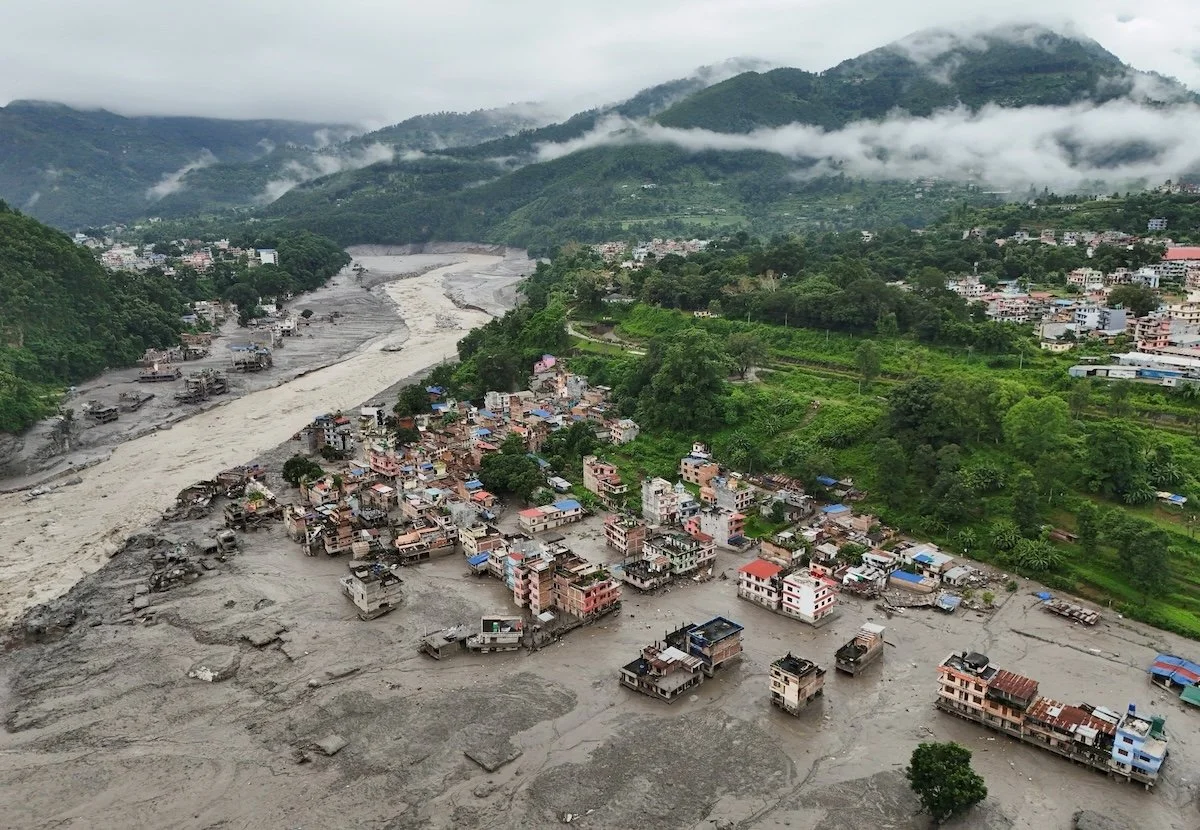
Edifici travolti dall'esondazione a Nuwakot, in Nepal, il 27 agosto 2026 (REUTERS/Navesh Chitrakar)
L’enorme alluvione che il 26 agosto ha colpito la valle del fiume Bhote Koshi, nella regione himalayana del Nepal al confine con il Tibet, è una tragedia enorme, con un bilancio ancora in aggiornamento di morti, dispersi e feriti, oltre alla distruzione di case e interi villaggi.
In questi giorni mi è capitato di vedere diversi video che documentavano quanto accaduto. Ancora più spesso mi è capitato di imbattermi in video falsi generati con l’intelligenza artificiale. Non mi è chiaro lo scopo degli autori. A naso potrei ipotizzare la volontà di attirare interazioni sui social network, attraverso stratagemmi ignobili.
Il fenomeno della disinformazione, naturalmente, esisteva già prima dell’intelligenza artificiale. Fotografie decontestualizzate, vecchi video riciclati e immagini manipolate accompagnano da molti anni guerre, elezioni e catastrofi naturali. Quello che sta cambiando è però la scala del fenomeno. Oggi è possibile produrre in pochi minuti un numero potenzialmente enorme di fotografie e video completamente falsi ma sufficientemente credibili da confondersi, almeno durante una visione veloce sui social, con la documentazione autentica.
Nel caso in questione, si è raggiunto un tale livello di saturazione di contenuti falsi, manipolati o decontestualizzati che il governo nepalese ha deciso di incontrare i rappresentanti locali di Meta e TikTok per sollecitare interventi contro quattro categorie di contenuti: video/immagini generati con IA e vecchi contenuti ripresentati come attuali, oltre a immagini cruente e falsi QR code per raccogliere donazioni.
Le piattaforme dispongono già di referenti attraverso i quali il governo può segnalare i post, ma secondo l'autorità nepalese impiegano dalle 24 alle 48 ore a intervenire e quel lasso di tempo è sufficiente a renderli virali, a fare disinformazione e a commettere anche truffe e abusi.
Nell’articolo “In disaster aftermath, Nepal battles a flood of misinformation” (qui il link), pubblicato dal Kathmandu Post, viene raccontata proprio questa seconda catastrofe, quella informativa, che si è sovrapposta alla prima.
Ora, proviamo a immaginare se un fenomeno di questa intensità si verificasse contemporaneamente su più grandi eventi di attualità. Come il referendum in Islanda sulla ripresa dei negoziati di adesione all’Unione Europea, alluvioni e grandinate in Italia, gli attacchi con droni e missili in Ucraina, Palestina o Russia, ecc.
Per ognuno di questi eventi potrebbero cominciare a circolare, nel giro di poche ore, decine o centinaia di fotografie e video falsi, mescolati a quelli autentici.
Già oggi, con bias e bolle social, si è visto quanto sia facile dissociarsi dalla realtà, ma nello scenario immaginato sarebbe ancora più semplice perdere completamente la bussola e, con essa, la fiducia nell’informazione.
𝗔 𝘄𝗮𝘃𝗲 𝗼𝗳 𝗔𝗜-𝗴𝗲𝗻𝗲𝗿𝗮𝘁𝗲𝗱 𝘃𝗶𝗱𝗲𝗼𝘀
The devastating flood that struck the Bhote Koshi River valley on 26 August, in Nepal’s Himalayan region along the border with Tibet, is already an enormous tragedy, with the number of dead, missing and injured still being updated, as well as homes and entire villages destroyed.
Over the past few days, I have come across several videos documenting what happened. Even more often, however, I have encountered fake videos generated using artificial intelligence. It is not entirely clear to me what those creating them are trying to achieve. At a guess, I would say it is largely an attempt to attract engagement on social media through particularly disgraceful tactics.
Disinformation, of course, existed long before artificial intelligence. Photographs taken out of context, old videos recycled as current footage and manipulated images have accompanied wars, elections and natural disasters for many years. What is changing, however, is the scale of the phenomenon. Today, it is possible to produce, within minutes, a potentially enormous number of completely fabricated photographs and videos that are nevertheless credible enough to be mistaken, at least during a quick scroll through social media, for authentic documentation.
In this particular case, the saturation of false, manipulated or decontextualised content has reached such a level that the Nepalese government decided to meet local representatives of Meta and TikTok to urge them to take action against four categories of content: AI-generated videos and images, old material presented as current, graphic images, and fake QR codes used to solicit donations.
The platforms already have designated contacts through whom the government can report problematic posts, but according to the Nepalese authorities it can take between 24 and 48 hours for them to act. That is more than enough time for false content to go viral, spread misinformation and also be used for scams and other abuses.
The article “In disaster aftermath, Nepal battles a flood of misinformation” (link in the comments), published by the Kathmandu Post, describes precisely this second disaster: the information disaster that has unfolded on top of the first.
Now imagine if a phenomenon of this intensity were to occur simultaneously around several major news events: the referendum in Iceland on resuming negotiations to join the European Union, floods and hailstorms in Italy, drone and missile attacks in Ukraine, Palestine or Russia, and so on.
For each of these events, within the space of just a few hours, dozens or hundreds of false photographs and videos could begin circulating alongside authentic ones.
Even today, with confirmation biases and social media bubbles, we have already seen how easy it can be to become increasingly detached from reality. In the scenario described above, it would become even easier to lose our bearings completely — and, with them, our trust in information itself.